
Pocket Prep Professional 2026
Pocket Prep, Inc.Education
4.5173.00 Reviews
- Version
- 3.29.1
- Installs
- 100.00K
- Age Rating
- Everyone
Screenshots
Our Review of Pocket Prep Professional 2026
 Analysis by Appyee
Preparing for a professional certification exam is rarely difficult because of a lack of material. The harder problem is turning spare minutes into useful study time, then finding out whether I actually understand a topic or have only recognized the wording of a familiar question. Pocket Prep Professional 2026 is built around that problem. It is an education app from Pocket Prep, Inc. that puts practice questions and mock-test preparation on a phone, with the aim of making exam revision more regular and more measurable.
After using it as a study companion, my view is fairly clear: Pocket Prep Professional 2026 works best as a focused question-practice tool, not as a complete replacement for an official textbook, course, or hands-on training. That distinction matters. If I already have the core knowledge and need a practical way to test recall, identify weak areas, and build a daily routine, the app is easy to recommend. If I am starting a demanding certification from zero and expect every concept to be taught in depth, I would use it alongside another resource rather than rely on it alone.
How the study experience feels in everyday use
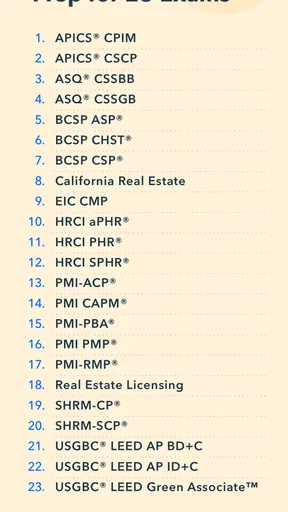
The app covers preparation for 21 professional certification exams and presents a large bank of practice material, including more than 22,000 questions and mock tests. Those figures explain its main appeal, but quantity is not the whole story. The real value comes from how quickly I can move from an idle moment to an intentional study session.
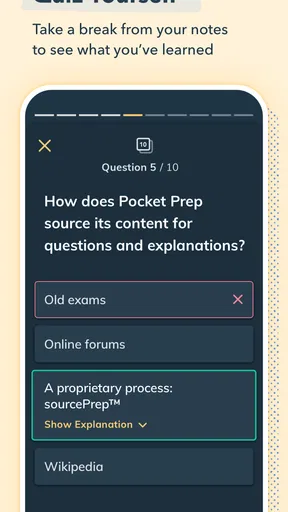
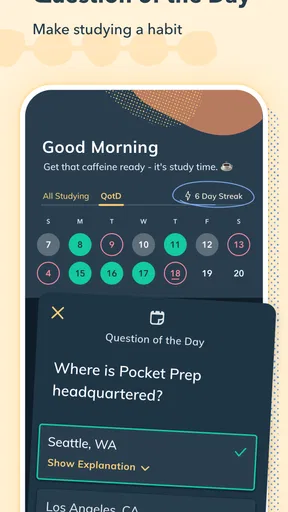
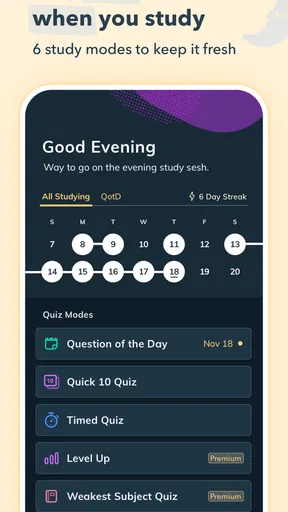
Instead of opening a long chapter and wondering where to begin, I can start with a short question set, work through a larger practice session, or use a mock exam when I want a more serious check of readiness. That makes it suitable for the awkward spaces in a normal day: a commute, a lunch break, or a quiet half-hour after work. The app does not magically create discipline, but it removes much of the setup friction that often causes study plans to fail.
I found the question-first approach particularly useful after reading from another source. A textbook can make a topic feel familiar because the explanation flows smoothly. Questions are less forgiving. They force me to retrieve a definition, distinguish between similar choices, or apply a rule without seeing the answer in advance. When I missed something, the mistake gave me a more useful next step than simply rereading the same page.
That workflow is one of the strongest reasons to install it. I would read or watch a lesson elsewhere, use the app to test the material, and then return to the original source only for subjects that caused trouble. This is more efficient than treating every chapter as equally important. It also prevents a common revision mistake: spending too long reviewing comfortable topics while avoiding the ones that actually threaten the exam result.
A practical routine for busy candidates
For a realistic weekday routine, I would divide the app into three kinds of sessions. First, I would use short question practice to keep the subject active when time is limited. Second, I would reserve a longer session for reviewing explanations and grouping mistakes by topic. Third, I would use mock tests occasionally to check whether I can maintain concentration and accuracy across a broader mix of subjects.
The important detail is not to treat every correct answer as proof of mastery. Sometimes I know an answer; sometimes I eliminate weaker choices; sometimes I guess correctly. I would mark uncertain answers mentally or note them separately, then review them even when the result was technically right. That habit turns the app from a score generator into a diagnostic tool.
A useful advanced workflow is to keep a small error log outside the app. I would record the concept behind each repeated mistake rather than copying the entire question. For example, the note might say that I confuse two related procedures or overlook a condition in a rule. After several sessions, patterns become visible. The app supplies the practice, while the error log supplies the personal map of what needs attention.
This also helps with exam anxiety. A single mock-test result can be misleading, especially after a poor day. A record of recurring errors is more actionable because it shows whether the same weakness is shrinking over time. I prefer that kind of evidence to chasing an impressive practice percentage without understanding why I got answers right.
What makes the question bank useful
The breadth of the question bank gives the app staying power. I am less likely to memorize a tiny repeated set if I use it over several weeks, and the mock-test format gives revision a different rhythm from ordinary drills. That variety matters because certification exams often punish narrow preparation. Knowing a handful of common questions is not the same as being ready for unfamiliar wording.
The app is also more useful when I resist the temptation to rush. Quick sessions are excellent for maintaining momentum, but speed can hide shallow understanding. I would use short practice for recall and longer sessions for reasoning. When an explanation exposes a gap, I would pause rather than immediately tap through to the next item. The best learning often happens in that pause.
There is a trade-off here. A large bank can create the feeling of progress simply because there is always another question available. I need to set a purpose before opening a session: review a weak area, practice under time pressure, or sample mixed topics. Without that intention, it is easy to collect activity without building a coherent study plan.
For that reason, I see the app as a flexible layer over a broader preparation strategy. It is strong at repetition, retrieval, and self-checking. It is not the place where I would expect to develop every underlying skill through detailed lessons, worked projects, or instructor feedback. Candidates should know that difference before paying for additional access.
Free access and the cost decision
The app is free to install, which makes trying the study style relatively low-risk. That is helpful because question-based preparation suits some learners much more than others. I would spend time testing whether the explanations, pacing, and exam coverage fit my needs before considering an upgrade.
In-app purchases range from around $21 to $125 per item. That is a meaningful spread, so I would not make the decision based only on the word “free.” The right question is whether the paid access covers the specific certification I am pursuing and whether I will use it consistently enough to justify the expense. A large question bank has little value if I open it only once a week.
I would also compare the purchase with the cost of the other materials already in my study plan. If I own a current textbook and need only extra practice, the app may be a sensible addition. If I still need foundational teaching, a structured course could provide better value, while the app remains a supplement for later revision. The best choice depends less on the headline number and more on the gap in my preparation.
Because the application supports multiple professional exams, users should pay attention to exam relevance rather than assuming that broad coverage automatically means universal usefulness. A question bank is valuable only when it matches the objectives, terminology, and level of the certification being attempted. I would verify the selected exam inside the app before building my entire schedule around it.
Where it falls short
The main weakness is the limit of a practice-question format. Questions can reveal that I do not understand a subject, but they cannot always provide the depth needed to repair that understanding. An explanation may clarify the correct choice while still leaving me unsure how the idea works in a real professional situation. When that happened, I needed to return to a fuller reference or course.
This matters most for beginners. Someone who has never encountered the terminology may learn to recognize answer patterns without developing durable knowledge. That is a dangerous shortcut. I would not recommend using the app as the only resource for a candidate who cannot explain the basic concepts in their own words before beginning practice.
There is another limitation in the psychology of repeated testing. A rising score can reflect familiarity with the question style rather than genuine readiness. To reduce that risk, I would mix new questions with review, avoid repeating the same session immediately, and occasionally take a mock test when I am not looking at notes. The app can support honest self-assessment, but I still have to use it honestly.
The phone format is convenient, yet it can also encourage fragmented attention. A five-minute session between notifications is not equivalent to a concentrated exam simulation. I would silence distractions and use a larger, uninterrupted block when practicing mock tests. For detailed review, a printed reference or larger screen may be more comfortable than reading everything on a phone.
These are not reasons to dismiss the app. They define its proper role. It is strongest when I need repeated retrieval and quick feedback; it is weaker when I need a teacher to unpack a difficult subject from first principles. Choosing it for the wrong job is more likely to cause disappointment than any individual design issue.
Who should use it, and who should choose something else?
I think the best audience is a working professional, student, or career changer who has a defined certification target and wants a dependable practice routine. It is especially useful for people who already learn from books, classes, or workplace experience but struggle to organize revision. The ability to turn small blocks of time into question practice can make preparation feel less overwhelming.
It also suits learners who like immediate feedback. If I prefer discovering weak points through questions rather than following a fixed lecture sequence, the app feels natural. Candidates who enjoy tracking their own progress and adjusting their study plan will get more from it than people who want every next lesson prescribed by an instructor.
I would be more cautious recommending it to someone who needs extensive accessibility support, prefers paper-only study, or finds multiple-choice practice demotivating. I would also steer absolute beginners toward a course or textbook first if the certification involves complex concepts that require sustained explanation. In that situation, the app becomes more valuable later, once the learner has enough context to understand why an answer is correct.
Compared with ordinary flashcard apps, this option is more directly tied to professional exam preparation because it combines a substantial question bank with mock-test practice. Compared with a full online course, it is lighter and more flexible, but it does not occupy the same teaching role. Compared with a textbook, it is better for active recall and portable practice, while the book remains better for uninterrupted reading and reference.
My preferred combination would therefore be a primary learning source, this app for retrieval practice, and an error log for personal revision. That three-part approach avoids asking one tool to do everything. It also gives me a way to check whether I am improving in understanding rather than simply becoming familiar with an interface.
Device requirements and basic details
Pocket Prep Professional 2026 is available as an education app for Android and iOS users, with an Everyone age rating. Android users need version 8.0 or later, so anyone with an older device should check compatibility before planning a study schedule around it.
The current version is 3.29.1, and the app was released on February 15, 2021. Pocket Prep, Inc. is the developer. Its average rating is 4.5 from around 1,800 ratings, with around 170 written reviews, and it has passed 100,000 installs. Those figures suggest that it has found a real audience, although popularity should not replace checking whether the particular certification content matches my needs.
I appreciate that the entry point is free, but I would treat the paid options as a study investment rather than an automatic purchase. Before committing, I would identify the exam I am taking, estimate how many weeks I will study, and decide whether I need occasional practice or sustained access. That simple check prevents paying for more material than my schedule can realistically use.
My final recommendation
My final opinion is positive, with a clear boundary: Pocket Prep Professional 2026 is a strong practice companion for certification candidates who need structure, repetition, and a broad supply of questions. It turns idle moments into useful revision and makes weak areas easier to spot than passive reading does.
I would recommend starting with the free experience, selecting the exact exam goal, and testing a deliberate routine before considering in-app purchases. Use short sessions to maintain momentum, longer sessions to study explanations, and mock tests to check endurance. Keep a separate record of uncertain answers and repeated mistakes, because that is where the app becomes much more valuable than a simple stream of quizzes.
Choose it when your main need is active exam practice; choose a course or detailed reference first when your main need is foundational teaching. Used in that role, it is practical, focused, and easy to fit around real life. Used as a complete education system, it may leave important gaps. For the right learner, that balance makes it a worthwhile addition to a serious certification plan rather than a shortcut pretending to replace one.
Verdict
Strengths of Pocket Prep Professional 2026
- Short, focused quizzes make it easy to study during brief breaks.
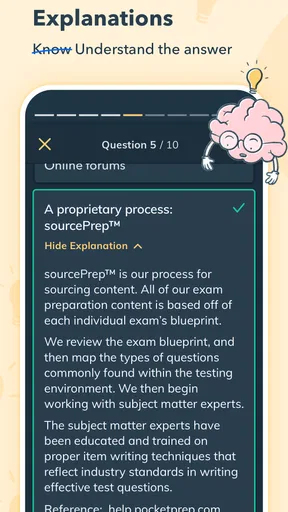
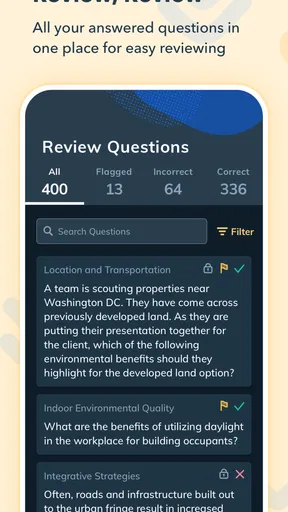
- Answer explanations clarify why each option is right or wrong.
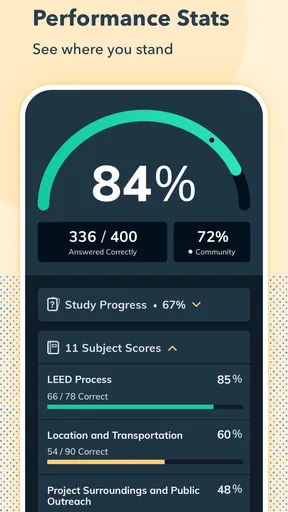
- Progress tracking helps identify weak subjects and monitor improvement.
- Practice questions can be repeated to reinforce difficult concepts.
- Useful for learners who prefer mobile study over printed review books.
Limitations of Pocket Prep Professional 2026
- Full access may require a costly subscription after the trial period.
- Some questions may not match the exact style of your official exam.
- Frequent notifications can feel distracting if not customized.
- Heavy daily use may consume noticeable battery and mobile data.
- It is a study aid, not a substitute for official exam materials.
Other Releases by Pocket Prep, Inc.
View All
Pocket Prep Nursing 2026
Education4.6

Pocket Prep IT & Cybersecurity
Education4.3

Pocket Prep EMS 2026
Education4.5

Pocket Prep Behavioral Health
Education4.5
Similar Picks in This Category
View All
Duolingo: Language Lessons
Duolingo4.7

Google Classroom
Google LLC2.8

Unacademy: Learn & Crack Exams
Unacademy3.2

Bible App for Kids
Life.Church4.4

Cake - Learn English & Korean
Cake Corp.4.7

Brainly: AI Homework Helper
Brainly4.5
Frequently Asked Questions
What is Pocket Prep Professional 2026?
Pocket Prep Professional 2026 is a mobile study and exam-preparation app designed to help users practice for professional certification and licensing tests. It typically provides question banks, explanations, progress tracking, and study tools in a portable format. The exact subjects and exams available can vary by platform, subscription, and region, so users should confirm that their target examination is supported before downloading.
Which exams and subjects are included in Pocket Prep Professional 2026?
The app is built around professional exam preparation, but the available question banks depend on the specific certification or test selected inside the application. Before subscribing, check the current catalog for your profession and exam version, because content coverage, question counts, update schedules, and exam categories may change. An app listing alone should not be treated as confirmation that every professional exam is included.
Does Pocket Prep Professional 2026 require a subscription or payment?
Pocket Prep Professional 2026 may offer free access to a limited selection of questions or features, while larger question banks, advanced analytics, full explanations, and complete study access can require a paid plan or in-app purchase. Pricing and renewal terms may differ between Android and iOS. Review the checkout screen carefully, especially whether billing is recurring, before starting a trial or confirming a subscription.
Can I use Pocket Prep Professional 2026 offline?
Offline availability depends on the particular exam package and the way the app handles downloaded study material. Some practice content may be accessible after it has been loaded, while account verification, synchronization, subscription checks, or certain resources may still require an internet connection. If you plan to study during travel or in areas with weak service, open the app beforehand and test the selected content offline.
Is Pocket Prep Professional 2026 enough to pass a professional exam?
Pocket Prep Professional 2026 can be a useful revision companion because it encourages regular practice and provides explanations that help identify weak areas. However, it should not normally be considered a complete replacement for official exam outlines, textbooks, clinical or professional references, and realistic full-length practice tests. Results depend on your preparation, and you should verify that the app’s material matches the latest official examination requirements.
